Have Query ? Reach Out Us!

Have Query ? Reach Out Us!
10 May , 2026
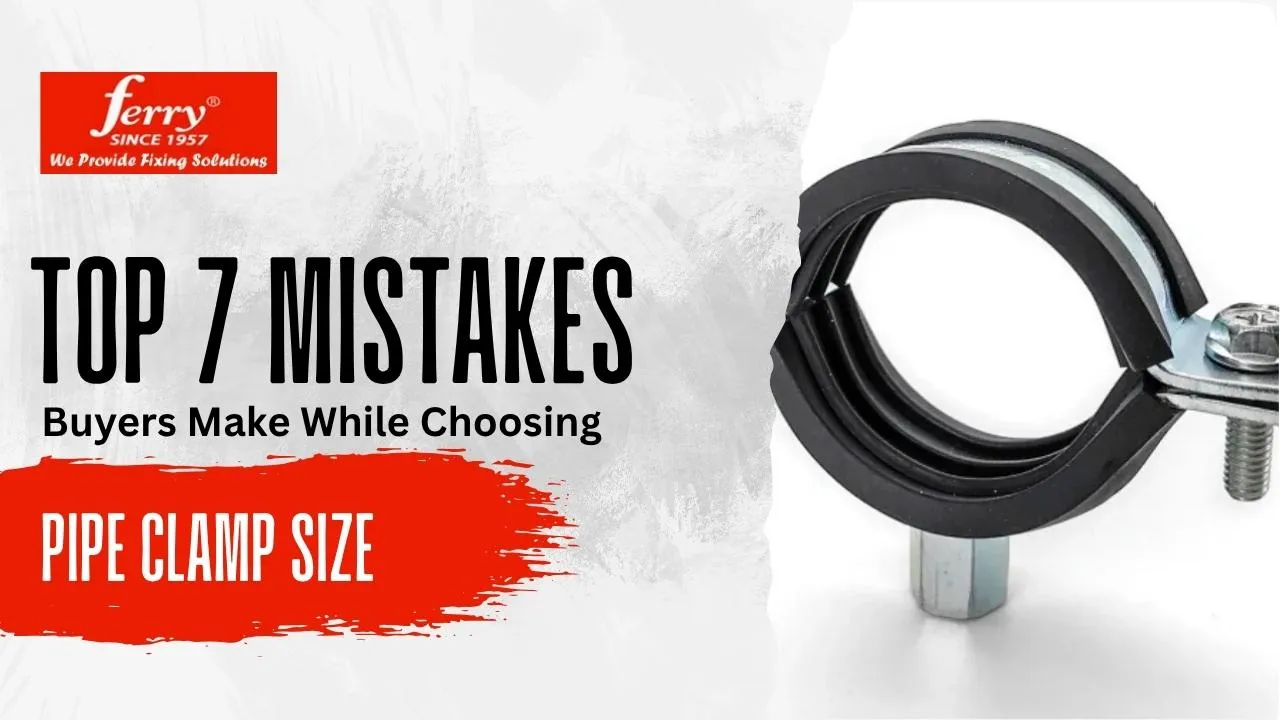
Top 7 Mistakes Buyers Make While Choosing Pipe Clamp Size
A Practical Guide from Ferry International
Choosing the right pipe clamp size looks simple, but in actual site work, many buyers make mistakes. A wrong clamp size can create loose fitting, poor pipe support, vibration, noise, installation delay, and extra cost.
At Ferry International, we manufacture and supply rubber-lined split clamps for plumbing, HVAC, industrial piping, fire-fighting pipe support, electrical conduit support, and bulk project requirements. From our experience as a manufacturer based in Tronica City, Ghaziabad, Uttar Pradesh, India, we have seen that most size-related problems happen because buyers check only the inch size and ignore the actual pipe outer diameter.
This guide explains the top 7 mistakes buyers make while choosing pipe clamp size and how to avoid them..
A pipe clamp is not only a small support accessory. It plays an important role in keeping pipes stable and properly aligned.
Correct pipe clamp size helps with:
Wrong size selection may look like a small issue, but in bulk projects, it can waste time, money, and labour.
Many buyers say, “I need 1 inch clamp” or “I need 2 inch clamp,” but they do not check the actual pipe outer diameter.
This is a common mistake.
Pipe clamp size should not be selected only by inch size. The correct method is to check the pipe outer diameter in mm and then match it with the clamp range.
| Buyer Says | Better Way to Check |
|---|---|
| I need 1 inch clamp | Check if pipe OD falls in 32–36 mm range |
| I need 2 inch clamp | Check if pipe OD falls in 60–64 mm range |
| I need 4 inch clamp | Check if pipe OD falls in 113–118 mm range |
Always ask for the pipe OD in mm before confirming the clamp size. This avoids confusion and wrong dispatch in bulk orders.
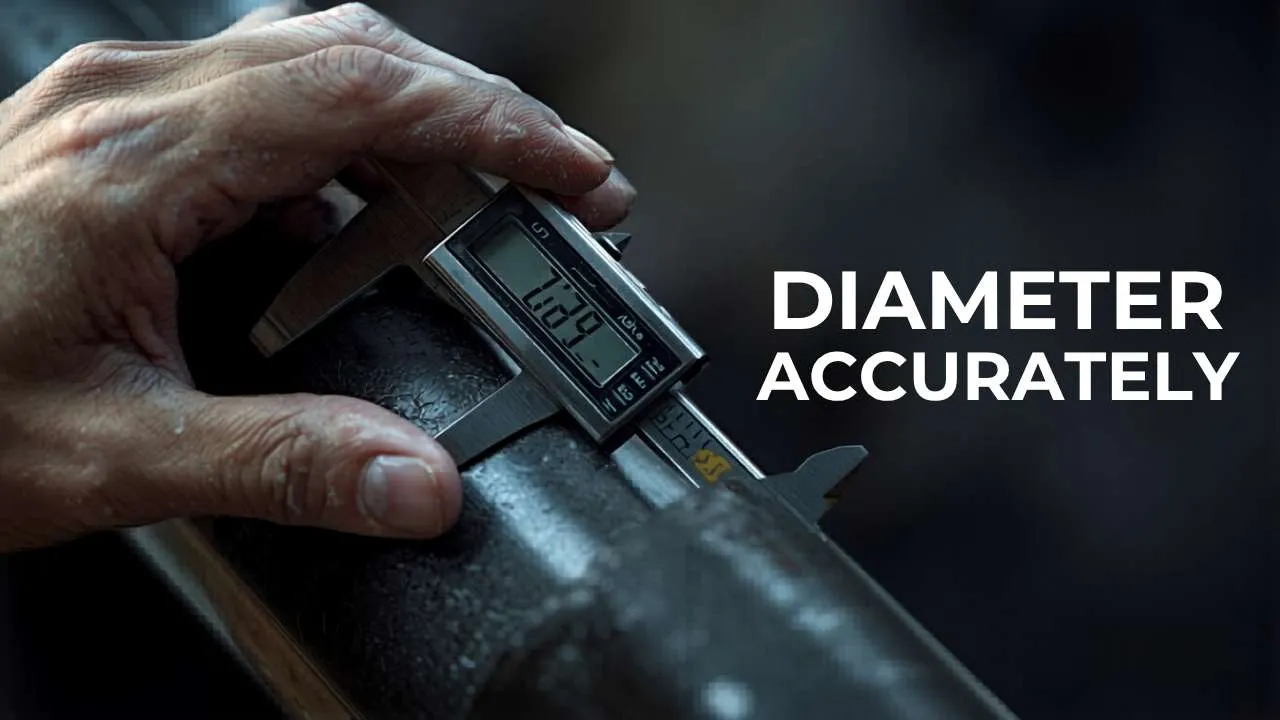
The clamp fits on the outside of the pipe. So, the most important measurement is the outer diameter, also called OD.
Some buyers check the pipe’s nominal size, but the actual outer diameter can be different based on pipe type, thickness, coating, or application.
If your pipe outer diameter is 34 mm, then you should select a clamp that covers 32–36 mm.
That means the suitable clamp is:
1 inch rubber-lined split clamp with M8/M10 connection nut
Every pipe clamp has a working range. This range tells you which pipe diameter the clamp can hold properly.
For example, a 1 inch clamp may cover 32–36 mm. This means it is suitable for pipes within this range.
If the pipe is smaller than the range, the clamp may become loose.
If the pipe is larger than the range, the clamp may not close properly.
| Size/Inches/mm | Pipe Range mm | Connection Nut Size |
|---|---|---|
| 3/8 inch | 17–20 mm | M8/M10 |
| 1/2 inch | 20–25 mm | M8/M10 |
| 3/4 inch | 26–30 mm | M8/M10 |
| 1 inch | 32–36 mm | M8/M10 |
| 1 1/4 inch | 38–44 mm | M8/M10 |
| 1 1/2 inch | 47–51 mm | M8/M10 |
| 53–58 mm | 53–58 mm | M8/M10 |
| 2 inch | 60–64 mm | M8/M10 |
| 65 mm | 63–67 mm | M8/M10 |
| 2 1/2 inch | 74–80 mm | M8/M10 |
| 81–86 mm | 81–86 mm | M8/M10 |
| 3 inch | 87–92 mm | M8/M10 |
| 107–112 mm | 107–112 mm | M8/M10 |
| 4 inch | 113–118 mm | M8/M10 |
| 6 inch | 160–167 mm | M8/M10 |
| 8 inch | 200–212 mm | M8/M10 |
For bulk orders, always share both details:
This helps the manufacturer supply the correct product.
For rubber-lined split clamps, the connection nut size is also important. In many projects, clamps are installed with threaded rods.
In this size range, all clamps are available with M8/M10 connection nut size. This makes them suitable for common pipe support systems.
| Point | Why It Matters |
|---|---|
| Threaded rod compatibility | Helps in wall or ceiling installation |
| Easy integration | Suitable for common pipe support systems |
| Site flexibility | Can work with M8 or M10 requirements |
| Bulk project use | Reduces confusion during installation |
Some buyers only confirm the clamp size but forget to confirm whether the clamp needs M8, M10, or M8/M10 connection nut compatibility.
This can create installation issues at the site.
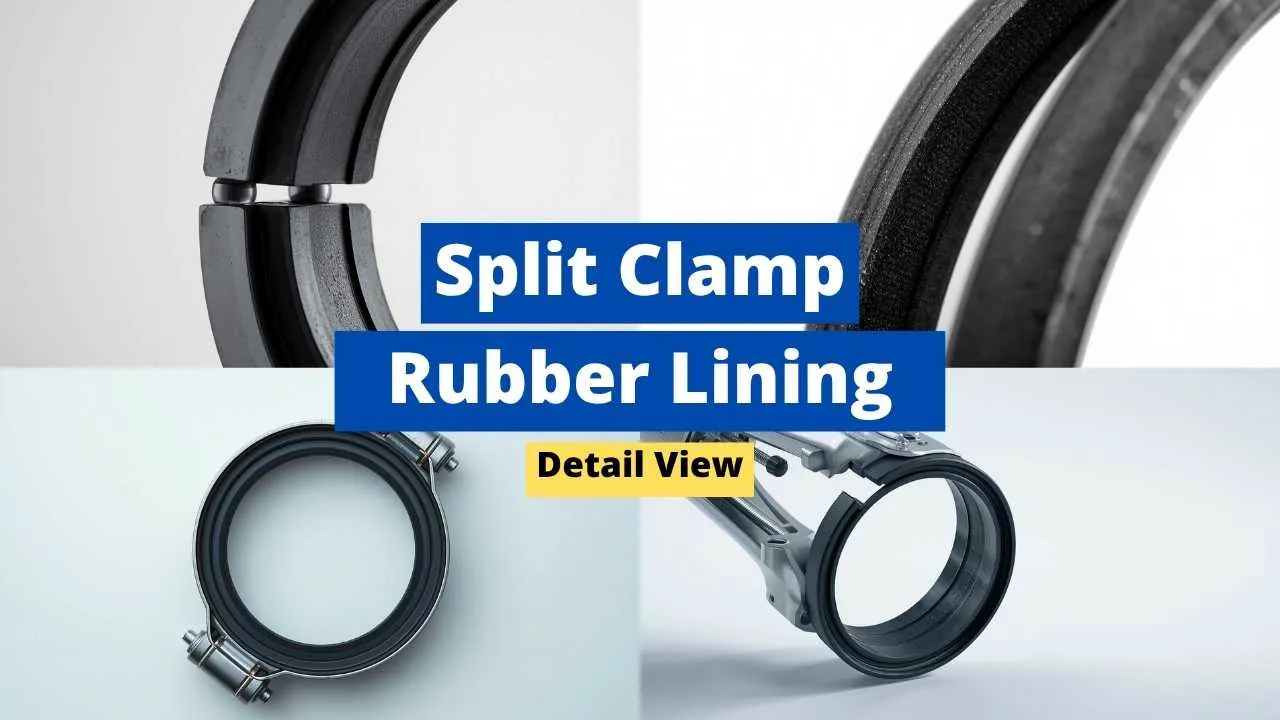
Normal metal clamps and rubber-lined split clamps are not the same.
A rubber-lined split clamp has rubber lining inside the clamp. This lining helps improve grip and reduces direct metal contact with the pipe.
| Benefit | Why It Helps |
|---|---|
| Better grip | Holds the pipe more securely |
| Less direct metal contact | Helps protect pipe surface |
| Reduced vibration | Useful in HVAC and mechanical areas |
| Better noise control | Helpful where pipe movement creates sound |
| Cleaner installation | Gives a more finished support system |
Do not select only the cheapest clamp. Select the clamp based on the application. For pipes where vibration, grip, or surface protection matters, rubber-lined split clamps are a better choice than basic metal clamps.
Different applications need different clamp selection. A clamp used for a basic plumbing line may not be selected the same way as a clamp used near machinery, HVAC lines, or industrial piping.
| Application | What Buyer Should Check |
|---|---|
| Plumbing | Correct pipe OD and wall/ceiling support |
| HVAC | Rubber lining, vibration control, correct spacing |
| Industrial piping | Strong support, correct size, bulk consistency |
| Fire-fighting support | Proper pipe holding and installation requirement |
| Electrical conduit | Proper diameter and neat alignment |
| Pump/machinery area | Vibration and movement control |
Many buyers select the same clamp for every application without checking actual site conditions.
This is risky because pipe load, vibration, temperature, and installation method can be different from site to site.
For critical projects, always follow the project specification, consultant drawing, or site engineer’s recommendation. A manufacturer can guide you on product size and compatibility, but final selection should match the project requirement.
This is one of the biggest mistakes in B2B buying.
In small orders, a wrong size may cause limited loss. But in bulk orders, wrong clamp size can create serious problems:
| Requirement | Details to Confirm |
|---|---|
| Product type | Rubber-lined split clamp |
| Pipe OD | Exact outer diameter in mm |
| Clamp size | Inch or mm size |
| Pipe range | Match with size chart |
| Nut size | M8/M10 |
| Quantity | Total pieces required |
| Finish | As per requirement |
| Packing | Standard or custom packing |
| Delivery location | City, state, country |
| Usage | Plumbing, HVAC, industrial, project, resale |
Before dispatching a bulk order, share a clear size-wise quantity list. This helps avoid misunderstanding between buyer, purchase team, supplier, and site installer.
| Mistake | What Happens | Correct Action |
|---|---|---|
| Choosing only by inch size | Wrong fitment | Check pipe OD in mm |
| Not measuring OD | Clamp may be loose or tight | Measure outside diameter |
| Ignoring mm range | Size mismatch | Match pipe with range chart |
| Forgetting nut size | Installation issue | Confirm M8/M10 requirement |
| Using normal clamp everywhere | Poor grip or vibration issue | Use rubber-lined clamp where needed |
| Ignoring application area | Wrong product selection | Select as per site use |
| Bulk order without confirmation | Delay and extra cost | Confirm size-wise quantity first |
First, check where the clamp will be used.
Example:
This helps you understand whether rubber-lined split clamp is suitable for the job.
Measure the outside diameter of the pipe in mm. Do not depend only on nominal pipe size.
Example:
If the pipe OD is 61 mm, check the chart and select the clamp that covers 60–64 mm.
Correct option:
2 inch rubber-lined split clamp
Use the size chart to match pipe OD with the right range.
| Pipe OD | Suitable Clamp Range | Suggested Size |
|---|---|---|
| 22 mm | 20–25 mm | 1/2 inch |
| 34 mm | 32–36 mm | 1 inch |
| 41 mm | 38–44 mm | 1 1/4 inch |
| 61 mm | 60–64 mm | 2 inch |
| 78 mm | 74–80 mm | 2 1/2 inch |
| 90 mm | 87–92 mm | 3 inch |
| 115 mm | 113–118 mm | 4 inch |
| 165 mm | 160–167 mm | 6 inch |
| 205 mm | 200–212 mm | 8 inch |
All listed sizes are available with M8/M10 connection nut size. This is useful for threaded rod installation.
Confirm this before order so the product matches the installation system.
For bulk buying, do not send only total quantity.
Instead of saying:
“We need 5,000 pipe clamps.”
Send like this:
| Size | Quantity |
|---|---|
| 1 inch | 1,000 pcs |
| 2 inch | 1,500 pcs |
| 3 inch | 1,000 pcs |
| 4 inch | 800 pcs |
| 6 inch | 700 pcs |
This makes quotation, production, packing, and dispatch much smoother.
Ferry International is a manufacturer based in Tronica City, Ghaziabad, Uttar Pradesh, India. We manufacture and supply pipe clamps for buyers who need practical, size-focused, and bulk-ready solutions.
Our focus is simple:
We do not believe in confusing buyers with only technical terms. Our aim is to help buyers choose the right product for the right application.
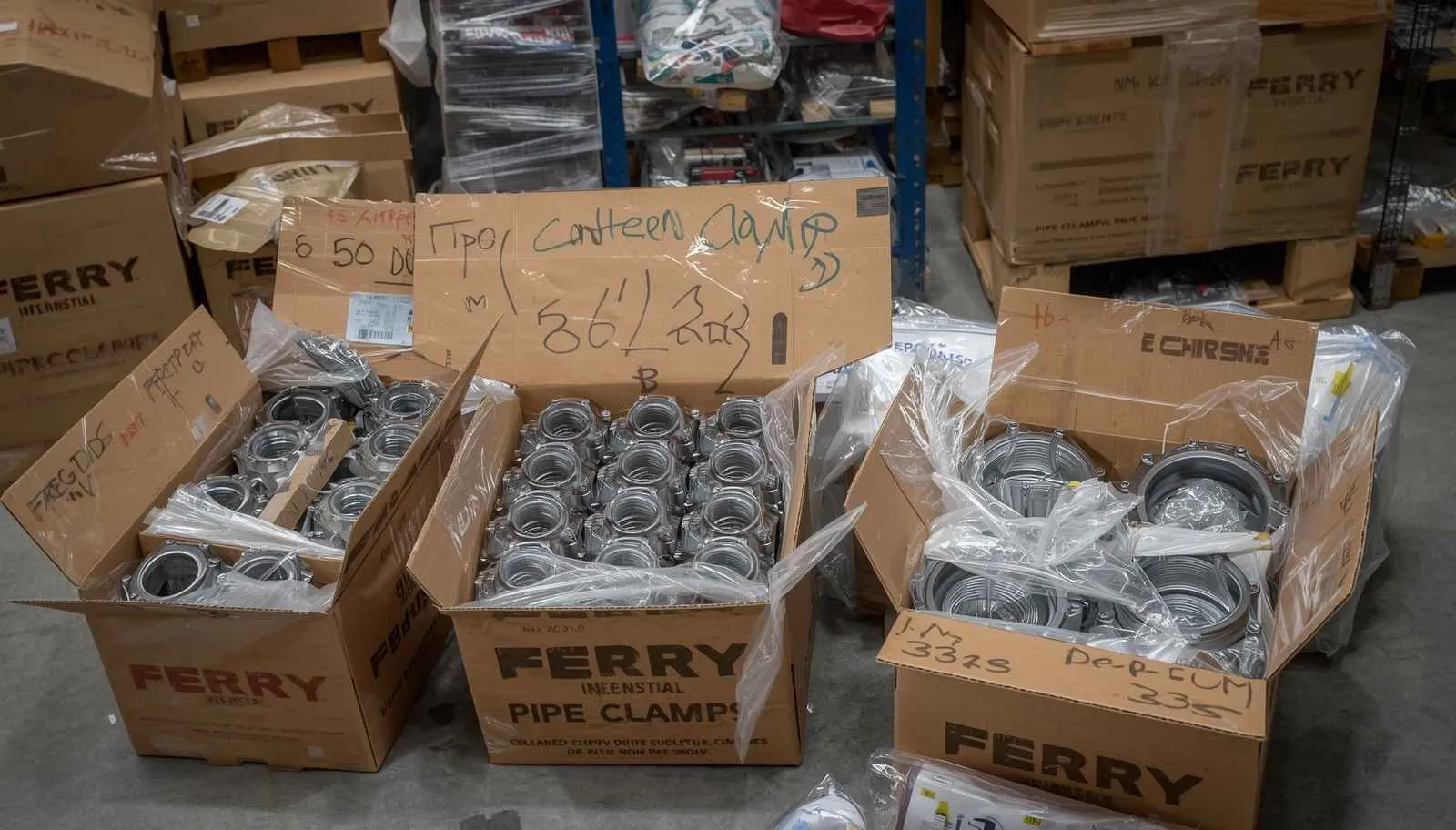
Before sending an enquiry, keep this checklist ready:
| Checklist Point | Details |
|---|---|
| Product name | Rubber-lined split clamp |
| Size required | Example: 1 inch, 2 inch, 4 inch |
| Pipe range | Example: 32–36 mm, 60–64 mm |
| Nut size | M8/M10 |
| Quantity | Size-wise quantity |
| Application | Plumbing, HVAC, industrial, etc. |
| Delivery location | City/country |
| Packing need | Standard or custom |
| Any special requirement | Mention clearly |
A rubber-lined split clamp is a pipe clamp used to hold and support pipes. It has rubber lining inside the clamp for better grip and reduced direct metal contact with the pipe.
Measure the pipe outer diameter in mm and match it with the clamp range chart. Do not select the clamp only by inch size.
M8/M10 refers to the connection nut size. It helps the clamp connect with M8 or M10 threaded rods in pipe support systems.
For a 34 mm pipe outer diameter, you can use a 1 inch rubber-lined split clamp, because its range is 32–36 mm.
For a 61 mm pipe outer diameter, you can use a 2 inch rubber-lined split clamp, because its range is 60–64 mm.
Yes, rubber-lined split clamps are commonly used in HVAC pipe support because they provide grip and help reduce vibration and pipe movement.
Yes. Ferry International manufactures and supplies rubber-lined split clamps for bulk buyers, contractors, traders, distributors, and industrial users. Buyers can share size-wise quantity and delivery details for quotation.
Choosing the right pipe clamp size is not difficult, but it must be done carefully. Most mistakes happen when buyers select only by inch size, ignore pipe OD, forget the mm range, or place bulk orders without proper size confirmation.
For the best result, always check:
A correct rubber-lined split clamp gives better pipe support, cleaner installation, and fewer problems at the site.
Ferry International manufactures and supplies rubber-lined split clamps with M8/M10 connection nut size for plumbing, HVAC, industrial piping, and project-based requirements.
Share your required size, pipe range, quantity, and delivery location to get a proper bulk quotation.
Ferry International
Tronica City, Ghaziabad, Uttar Pradesh, India
Manufacturer and Bulk Supplier of Rubber-Lined Split Clamps
Have Query ? Reach Out Us!
Recent Post
Since the inception, Ferry International is offering the huge range of the anchors, screws, nut and bolts, clamps, and pipes, wire mesh, etc. With the experience of more than six decades in the field of manufacturing industrial fasteners to the meet the demand of every industry, we are world class Nut Bolt manufacturers, suppliers, and exporters.
Follow Us
Important Links
Our Services
Contact Us

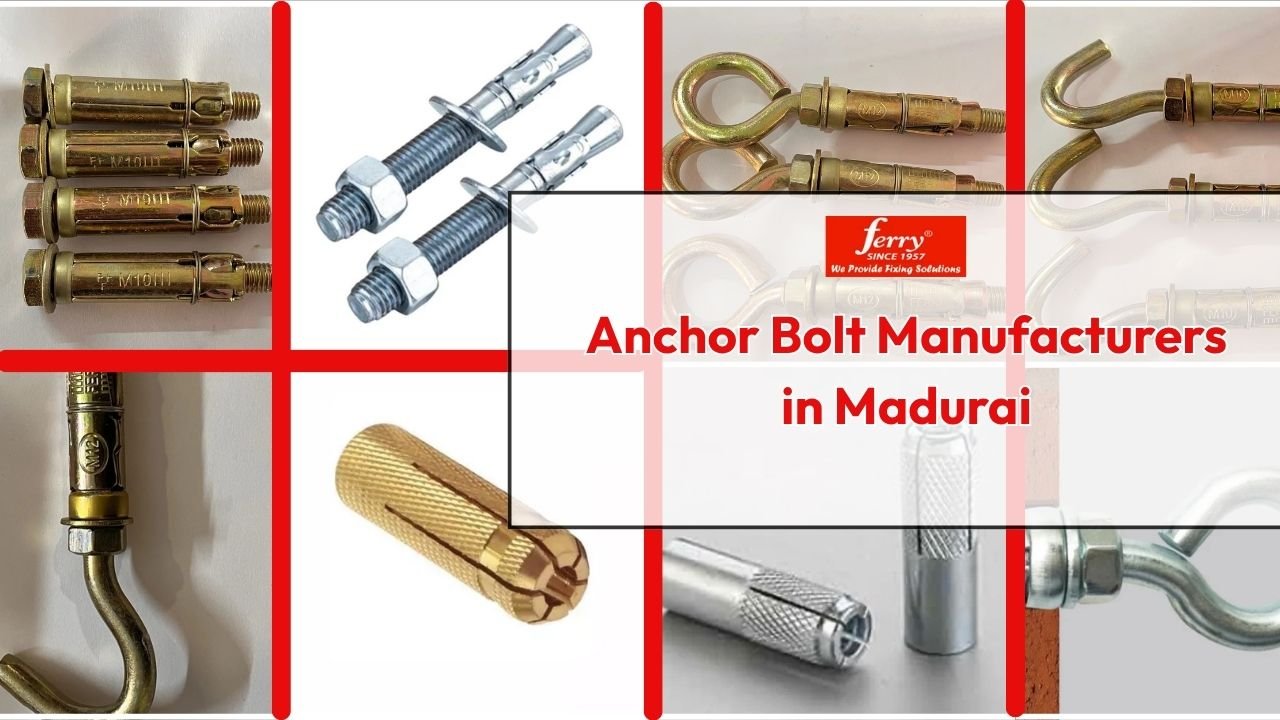
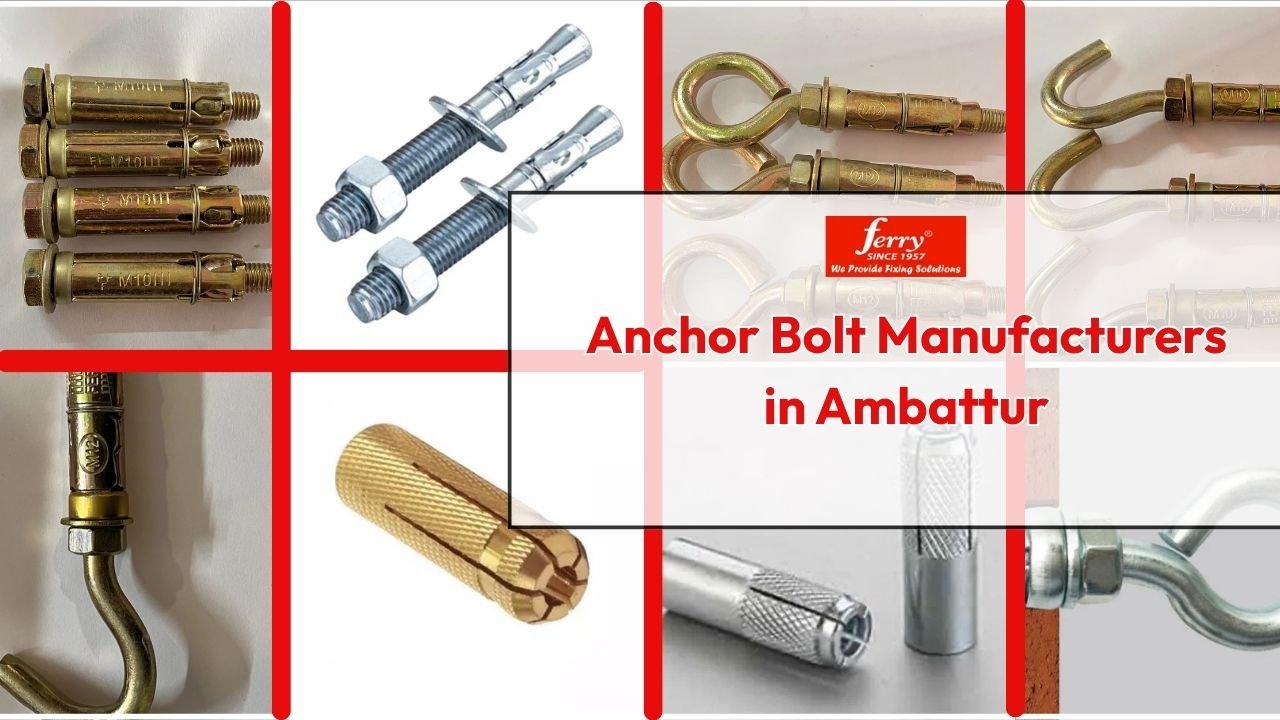
.jpg "Anchor Bolt Manufacturers in Haridwar")


.jpg "Brass Anchor Manufacturers Jamnagar Gujarat")



.jpg "Top Anchor Bolt Manufacturers in India (2026) | Ferry International")


.jpg "Drop-In Anchors for Concrete Fixing")
 Bulk Supplier.jpg "Rubber Lined Split Clamp (Cushioned Pipe Clamp) – Bulk Supply")
.jpg "Sprinkler Clamp Manufacturer in Telangana | Project Bulk Supply by Ferry International")
.jpg "Rubber Lined Pipe Clamp")