Have Query ? Reach Out Us!

Have Query ? Reach Out Us!

30 Nov , 2025
Concrete Screws vs Concrete Anchors: Which Fastener Is Better for Masonry?
By Ferry International – India’s Leading Manufacturer & Exporter of Industrial Anchors & Fasteners
When working on masonry projects—whether in construction, industrial setups, solar installations, PEB structures, commercial interiors, or home repairs—the fastener you choose plays a major role in overall safety and performance. Two of the most commonly used solutions are concrete screws and concrete anchors.
Even though both are used to fix items into concrete, brick, or block, their:
They are completely different.
Selecting the wrong fastener can lead to loose fixtures, structural damage, equipment failures, and safety hazards. For contractors, engineers, builders, and project managers, understanding the difference is essential.
This detailed guide by Ferry International, a global manufacturer of industrial anchors and fasteners, explains everything you need to know about concrete screws vs. concrete anchors—and helps you choose the right one.
Concrete screws are self-tapping fasteners designed for light-to-medium duty fixings. They cut their own internal threads inside the material when inserted.
Their high–low threads bite into concrete when the screw is driven into the drilled hole. This creates friction and a strong but limited hold.
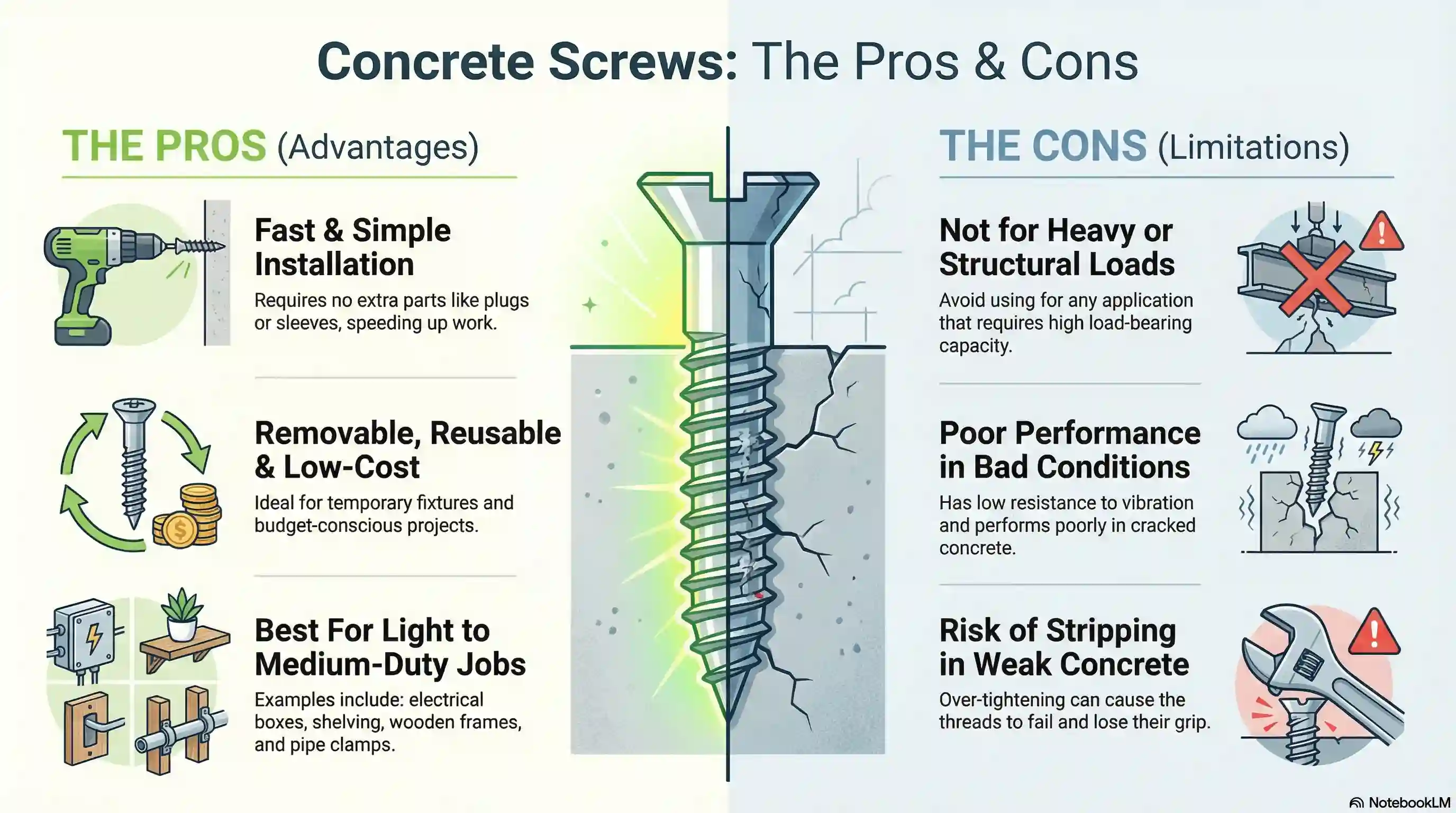
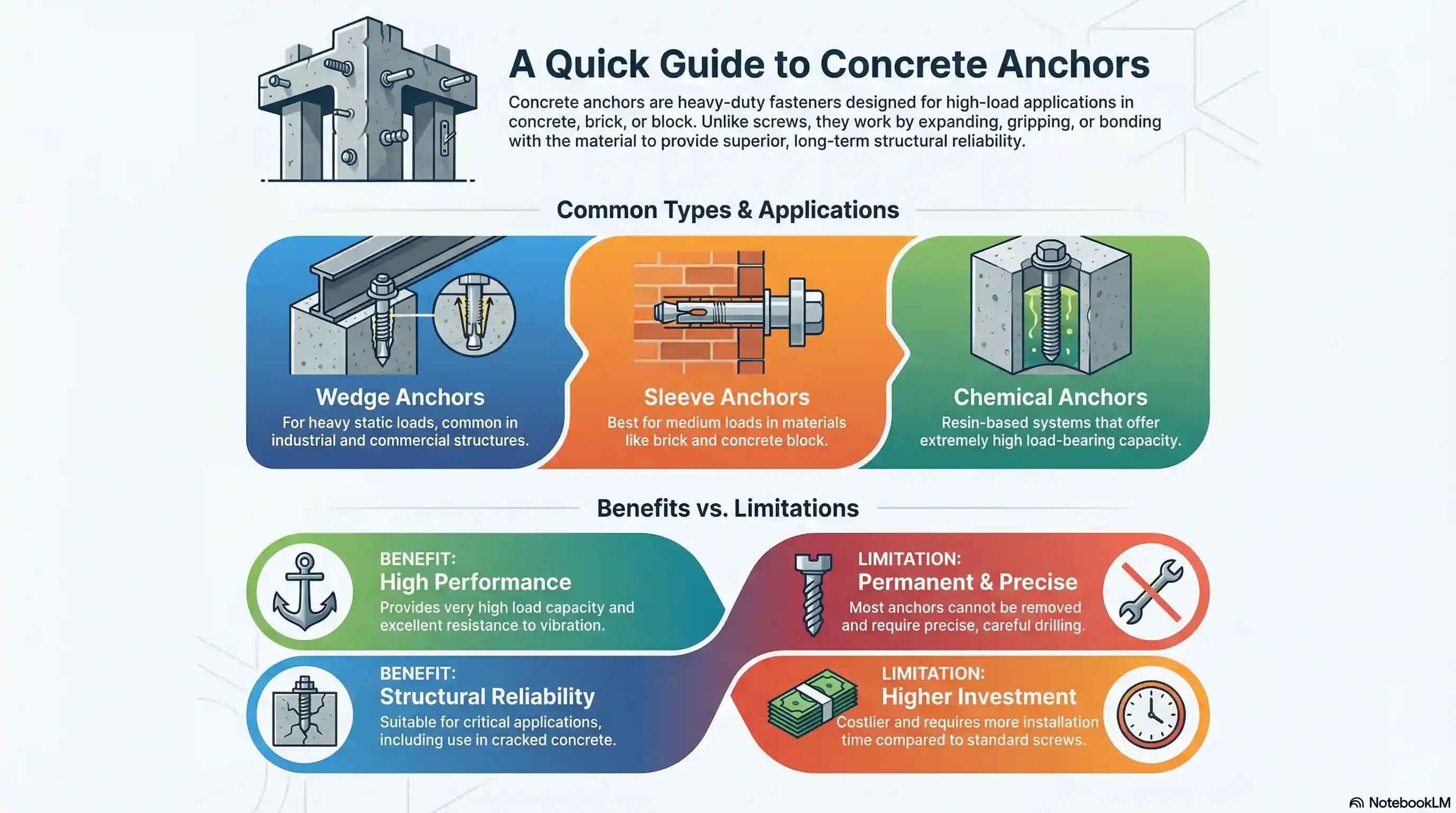
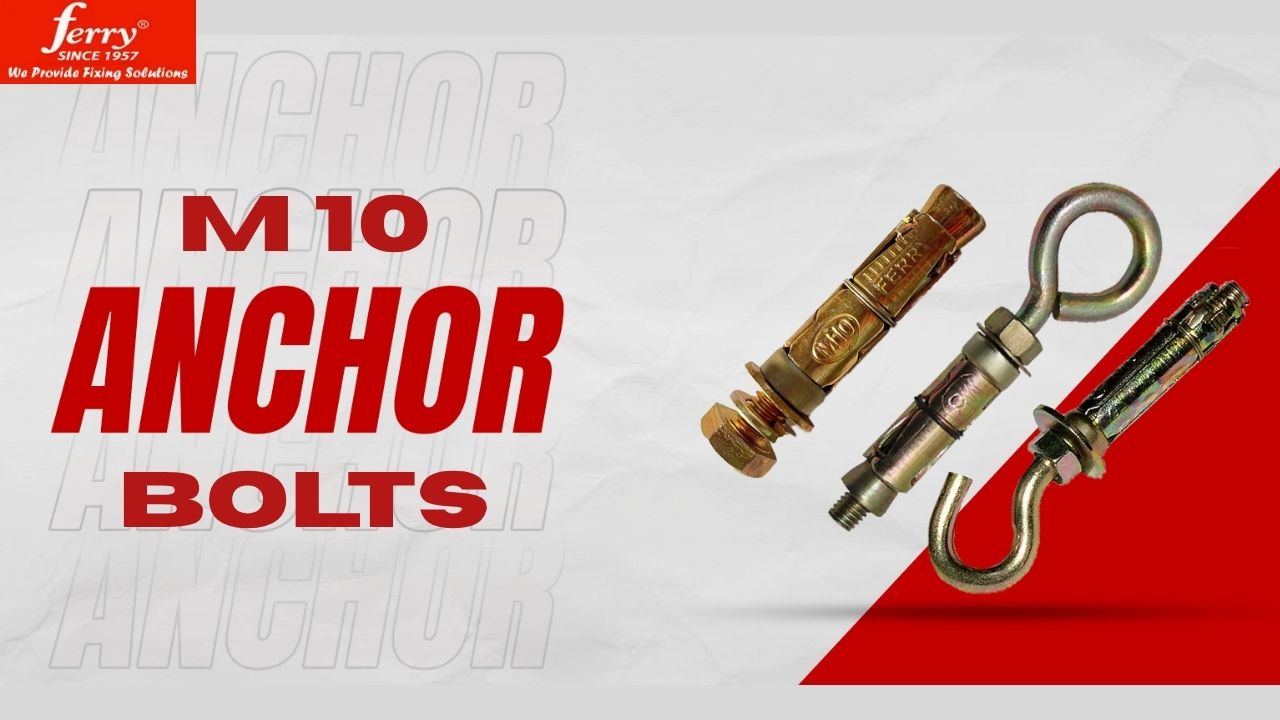
Concrete anchors are heavy-duty fastening systems designed for high load-bearing capacity and long-term performance. Unlike screws that rely on cutting threads, anchors work by expanding, gripping, or bonding inside the hole.
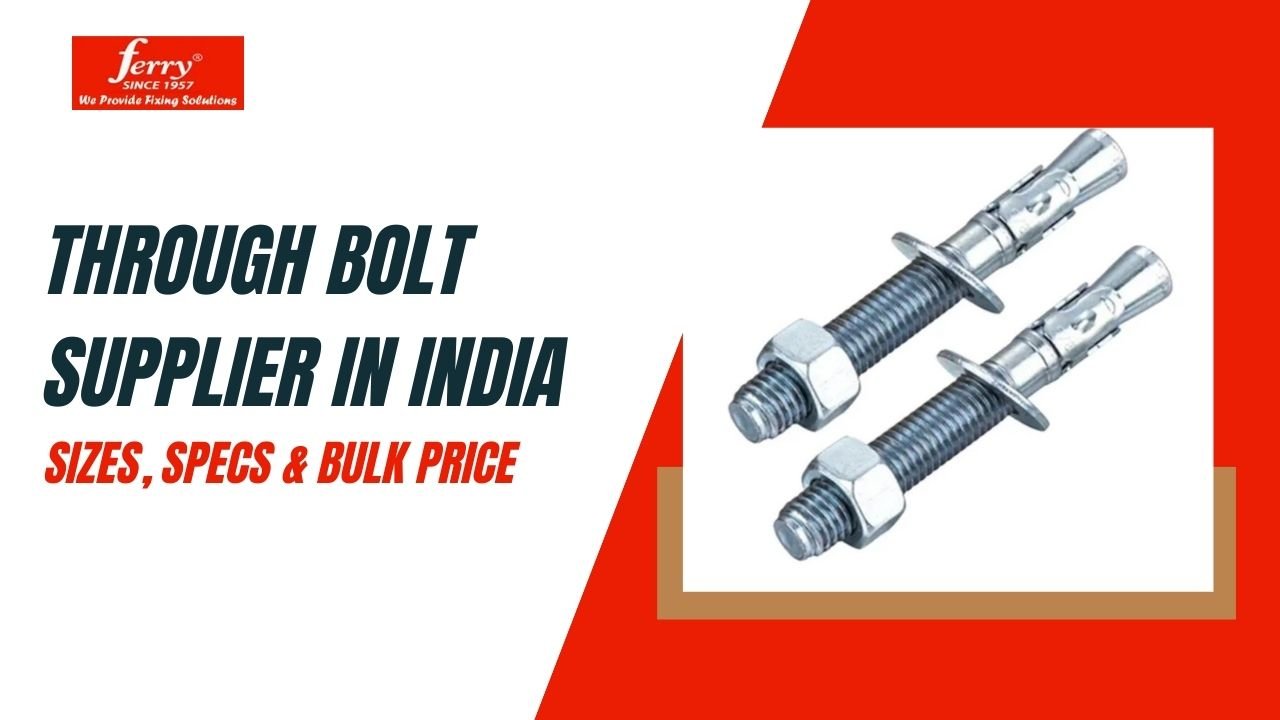
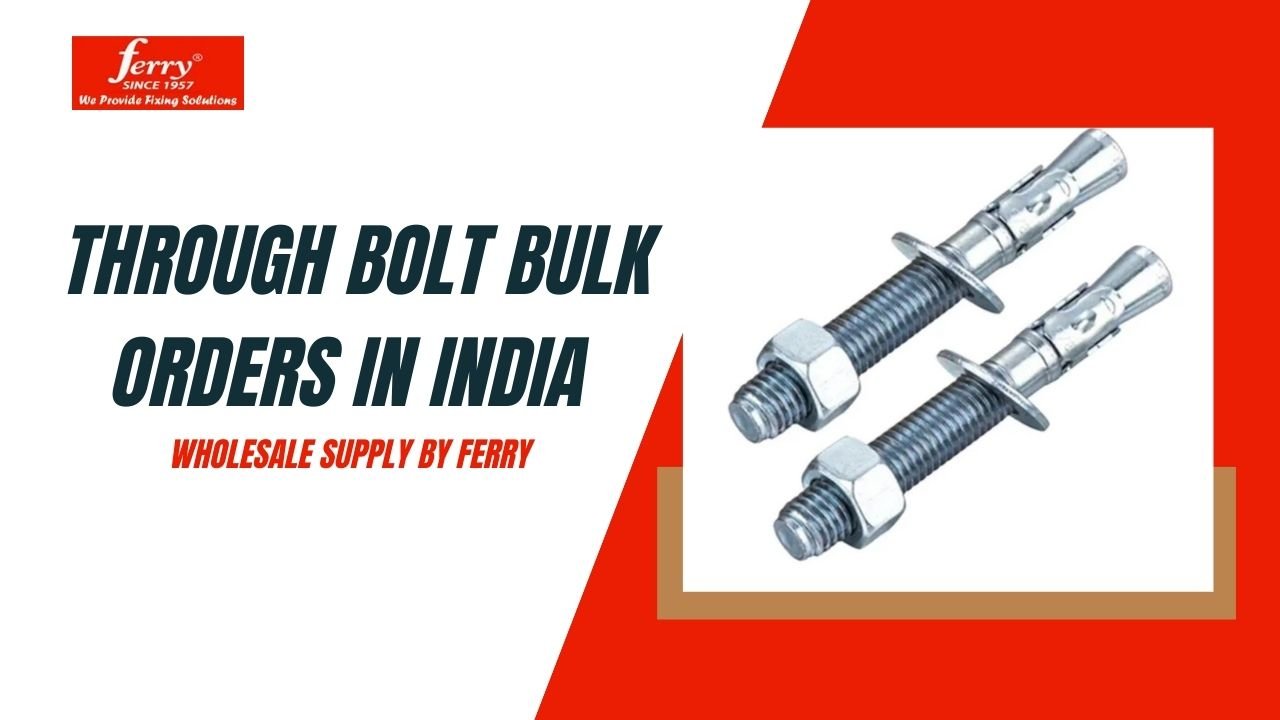
1. Wedge Anchors / Through Bolts (HDG, SS304, SS316)
2. Shield Anchors (3-Leaf & 4-Leaf)
3. Drop-In Anchors
4. Brass Anchors
5. Eye Hook Anchors
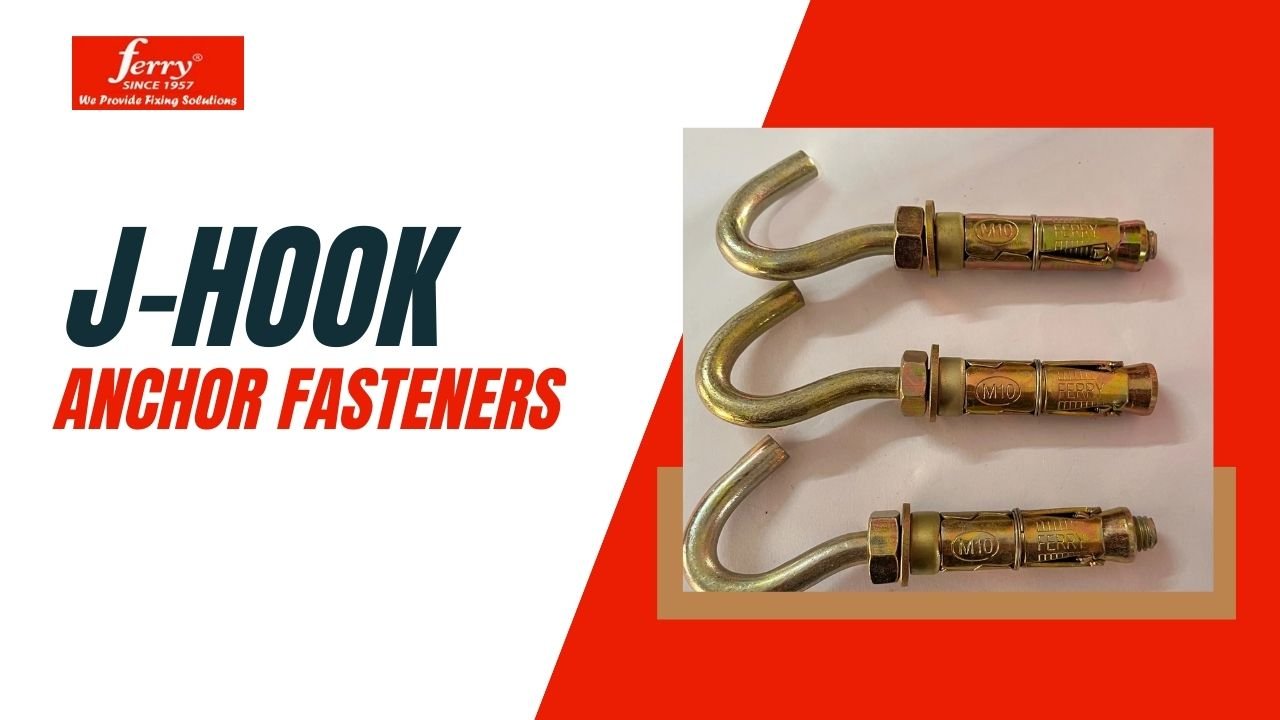
6. J-Hook Anchors
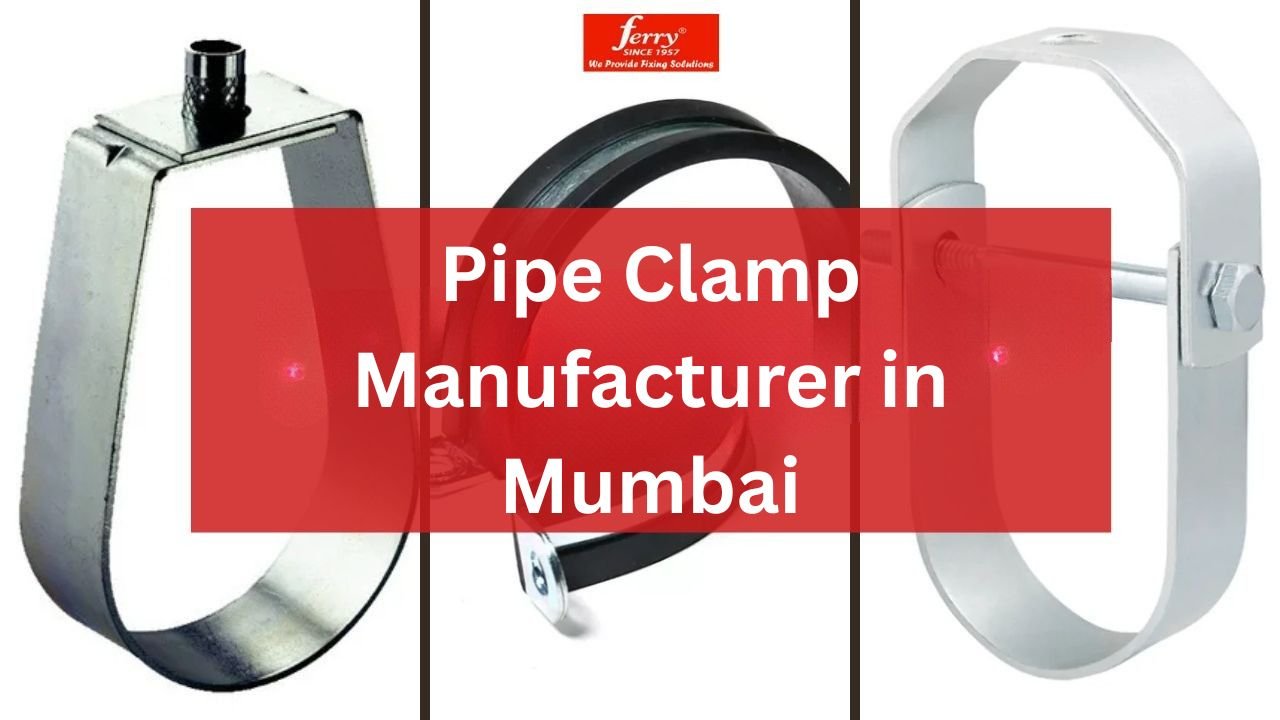
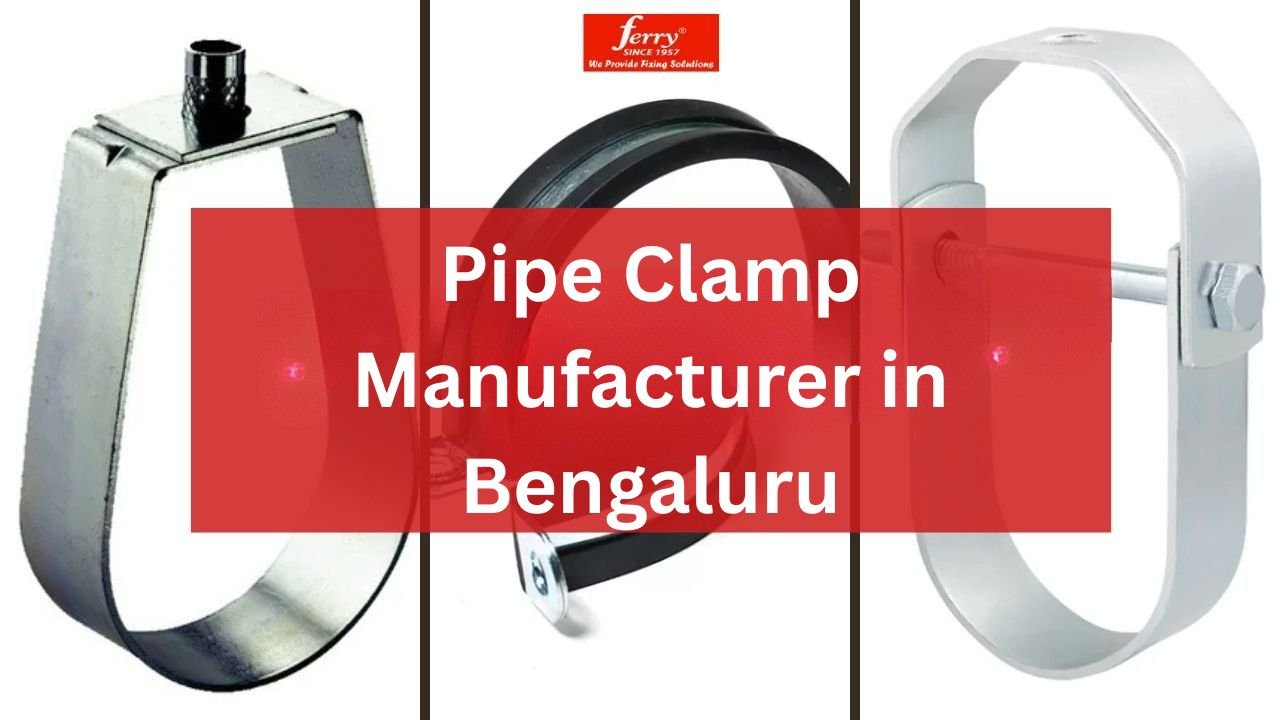
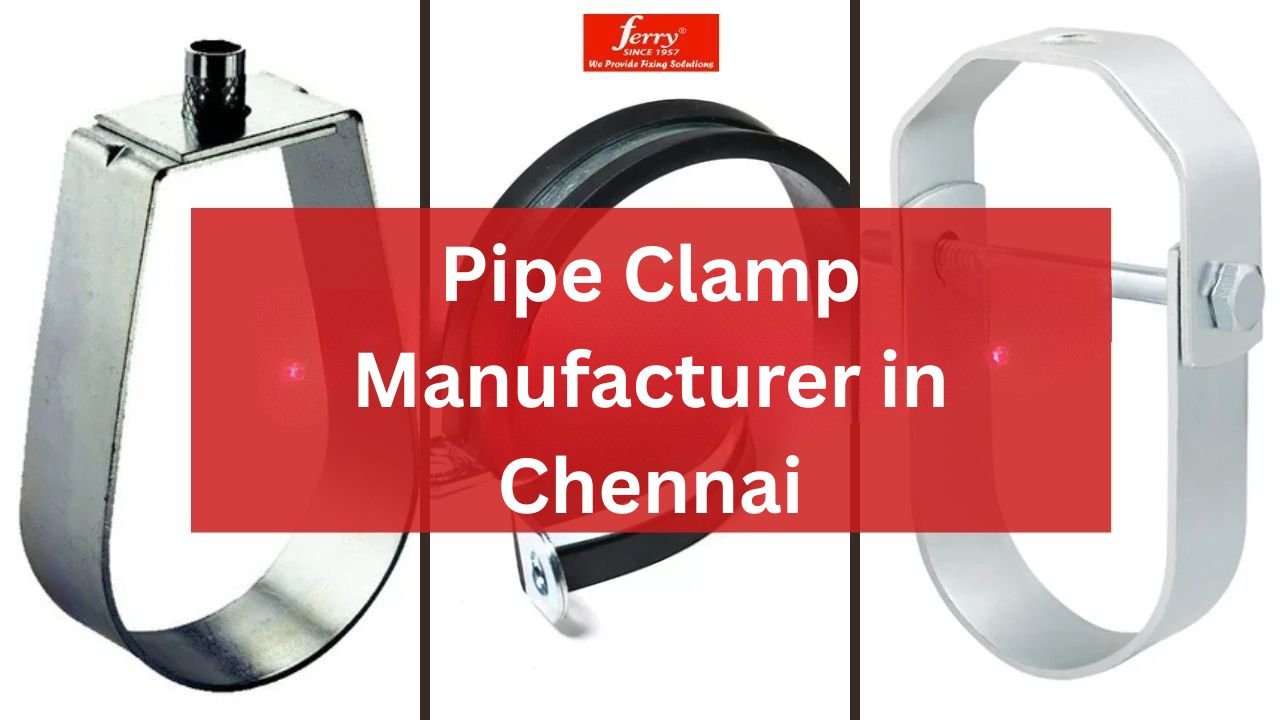
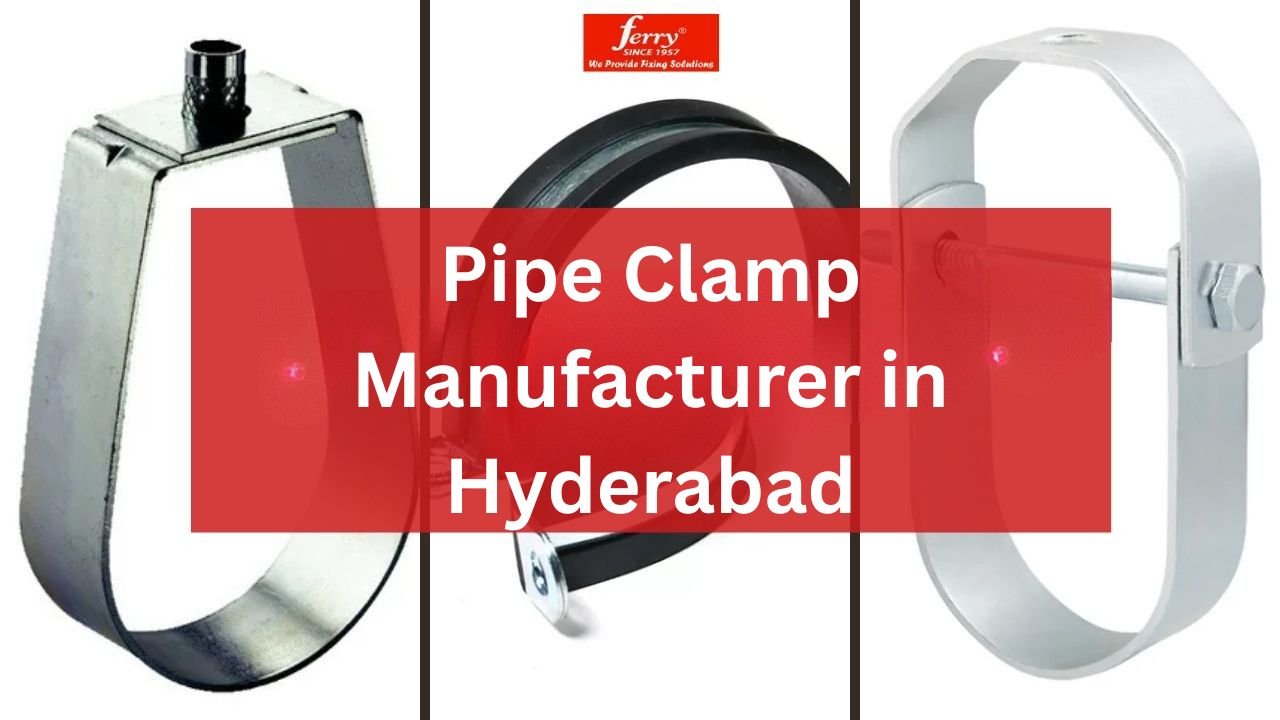
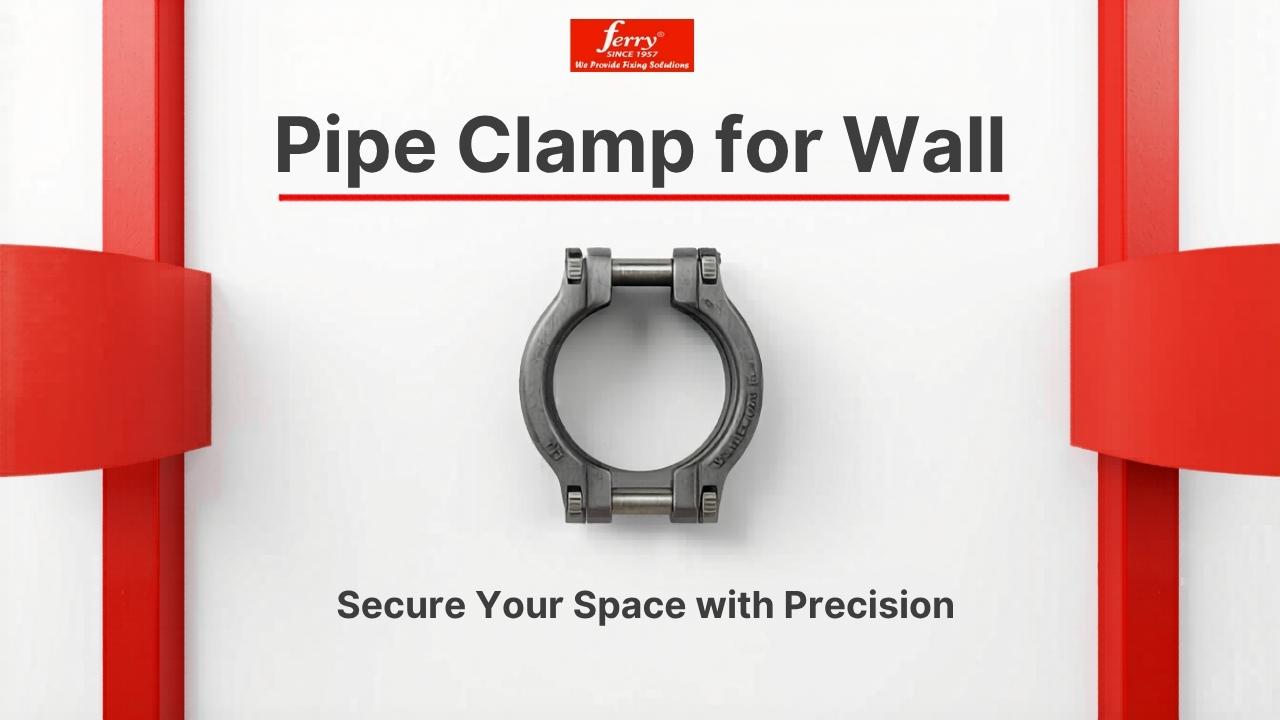
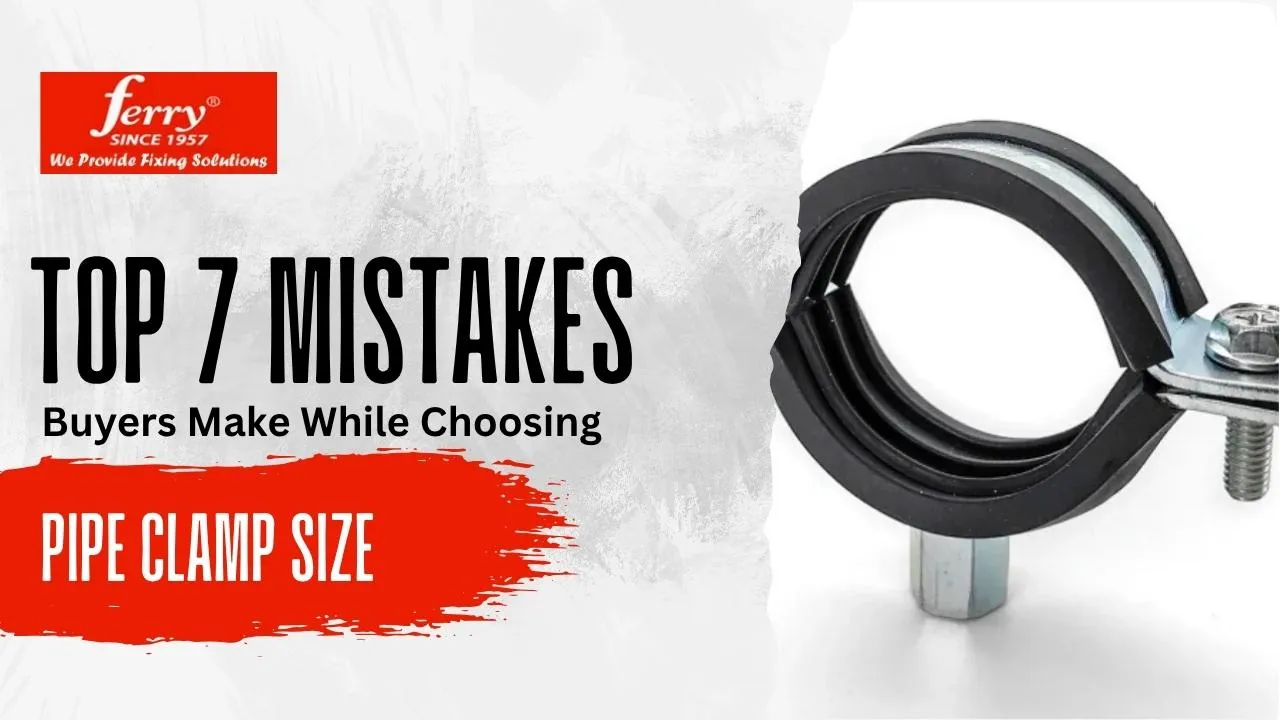
7. Pipe Clamps & Support Systems
8. Custom Fasteners for OEMs & Industries
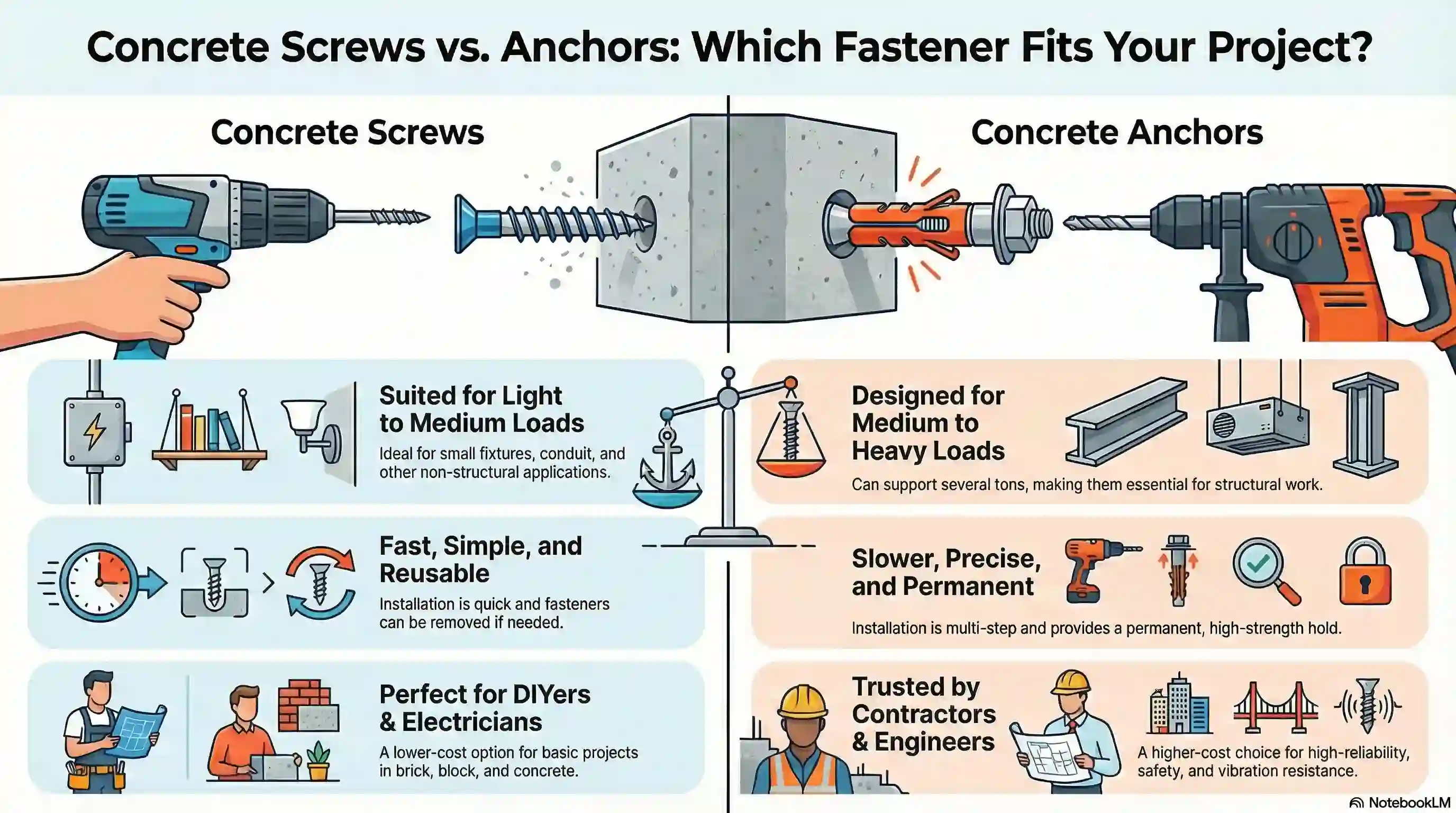
| Feature / Parameter | Concrete Screws | Concrete Anchors |
|---|---|---|
| Load Capacity | Light → Medium | Medium → Heavy (up to several tons) |
| Installation Speed | Very fast | Slower (more steps) |
| Reusability | Removable & reusable | Usually permanent |
| Drilling Requirement | Simple drilling | Precise drilling & cleaning |
| Vibration Resistance | Low | High (ideal for machinery) |
| Cost | Lower | Higher |
| Suitability in Cracked Concrete | Limited | Good (with correctly rated wedge anchors) |
| Applications | Small fixtures, DIY | Industrial, structural, heavy-duty |
| Base Materials | Brick, block, concrete | Mainly concrete (cracked & uncracked) |
| Strength & Safety | Moderate | Very high & reliable |
| Ideal Users | Homeowners, electricians | Engineers, contractors, industrial users |
✔ Load is light
✔ Installation must be quick
✔ Fixture is temporary or removable
✔ Using brick or block
✔ Mounting small products
✔ Load is heavy
✔ Safety is critical
✔ Structure experiences vibration
✔ It’s an industrial or construction project
✔ Compliance with IS / ASTM standards is required
✔ Long-term performance is needed
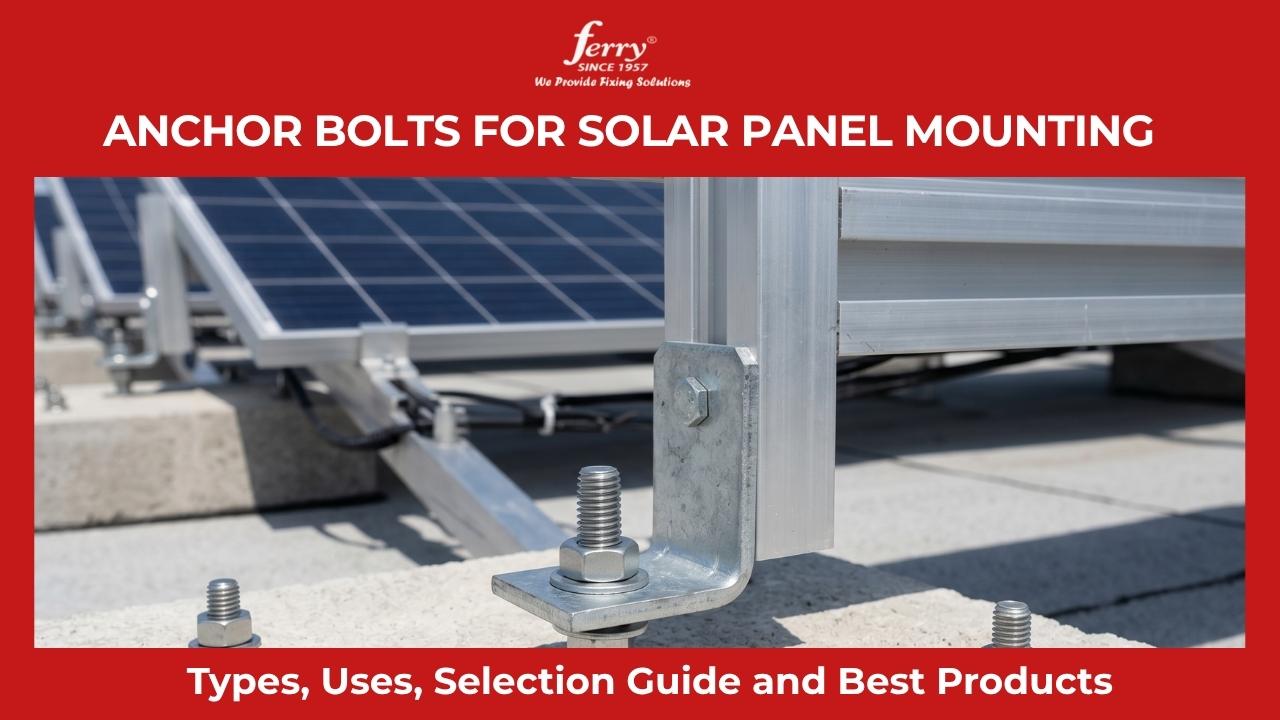
HDG wedge anchors are preferred for module mounting structures.
✔ High wind load resistance
✔ Long-term durability
Drop-in anchors are used for suspended ducts and threaded rods.
✔ Strong overhead grip
✔ Vibration resistance
Wedge anchors are used for pallet racks.
✔ High safety requirements
✔ Supports dynamic loading
Stainless steel wedge anchors / anchor bolts are used.
✔ Structural stability
✔ Shock and vibration resistance
Concrete screws for conduits, cable trays, boxes.
✔ Fast, economical, convenient
Using certified anchors ensures consistent and safe performance.
Concrete screws are best for small, quick, non-critical applications.
Concrete anchors are designed for heavy-duty, structural, and industrial purposes.
For any application where safety, load, or long-term performance matters, always choose concrete anchors.
Ferry International manufactures and supplies:
📞 Call/WhatsApp: +91 9990877399
🌐 Website: www.ferry-international.com
📩 Email: contact@ferry-international.com
Have Query ? Reach Out Us!
Recent Post
Ferry International — bulk anchor bolt manufacturer from Ghaziabad, U.P., since 1957. We produce ASTM & IS-compliant Shield Anchors, Through Bolts, Drop-in Anchors, J-Hook Anchors, Eye Hook Anchors, Brass Anchors, and pipe clamps for construction, oil & gas, power, marine, solar, and infrastructure. Bulk RFQs only. ISO 9001:2015 | ZED Bronze | UDYAM Registered.
Follow Us
Important Links
Our Services
Contact Us

.jpg "Anchor Bolt Manufacturers in Haridwar")


.jpg "Brass Anchor Manufacturers Jamnagar Gujarat")

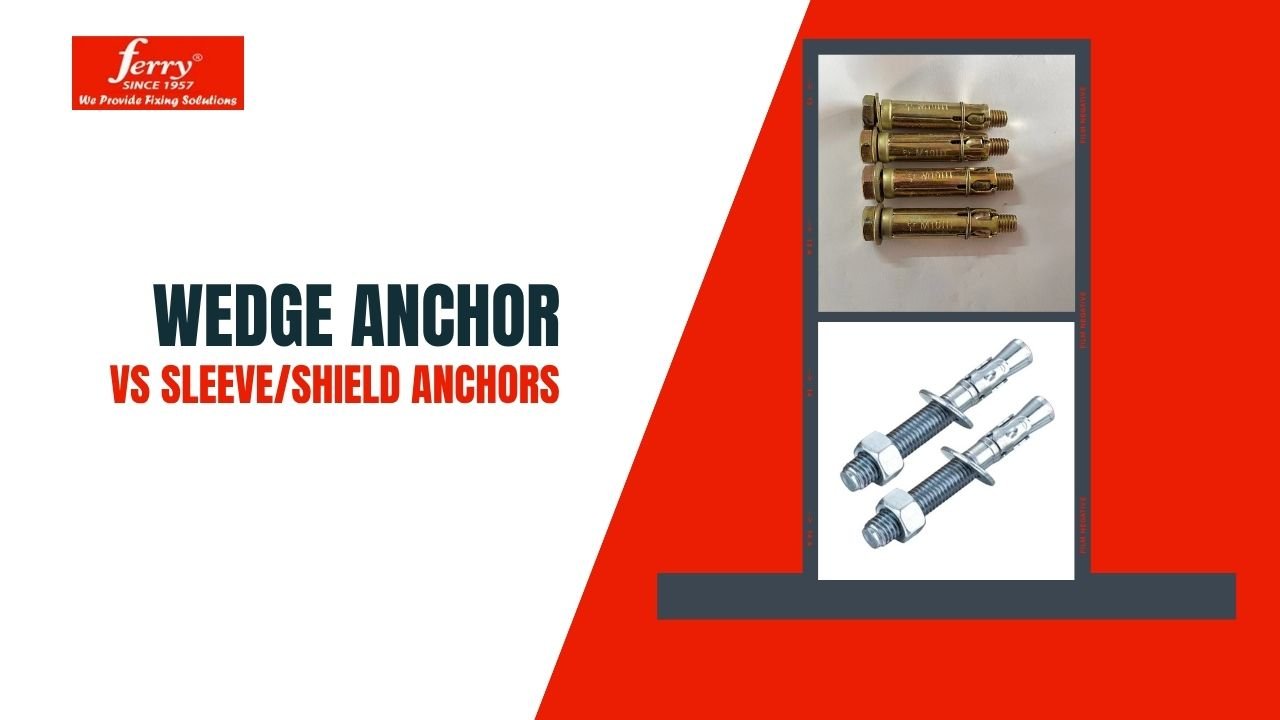
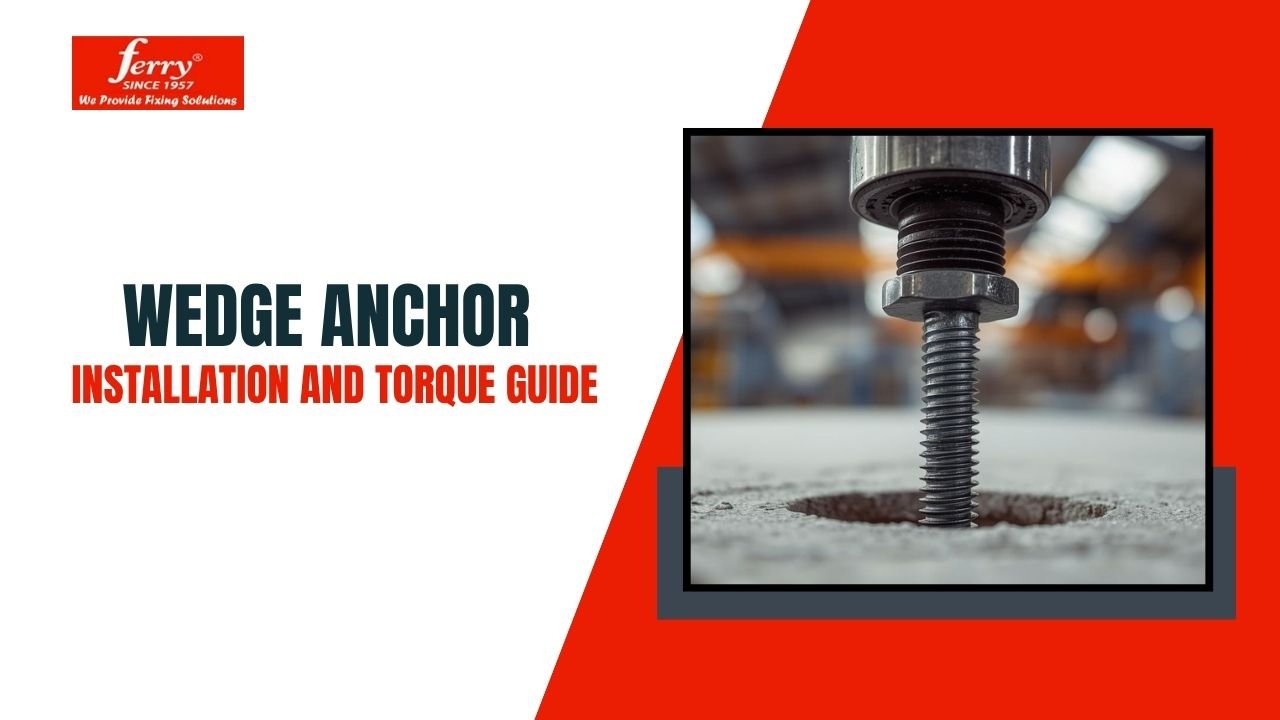
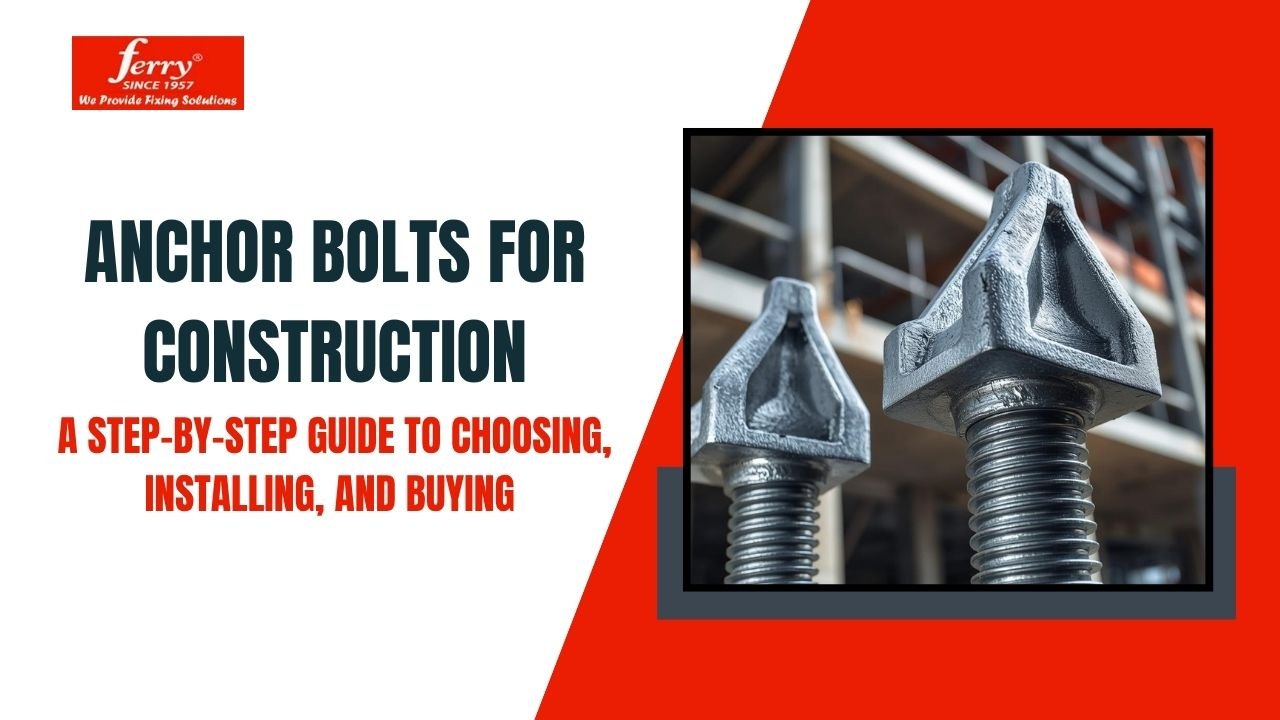
.jpg "Top Anchor Bolt Manufacturers in India (2026) | Ferry International")


.jpg "Drop-In Anchors for Concrete Fixing")
 Bulk Supplier.jpg "Rubber Lined Split Clamp (Cushioned Pipe Clamp) – Bulk Supply")
.jpg "Sprinkler Clamp Manufacturer in Telangana | Project Bulk Supply by Ferry International")
.jpg "Rubber Lined Pipe Clamp")
.jpg "How to Choose Fasteners for Industrial Projects")
.jpg "Bulk Anchor Bolt Supplier for New Berlin,")
.jpg "Anchor Bolts Supplier for Bulk Orders in South Africa")